Readiness
Readiness Center
Build an on-device plan for contacts, a meeting place, weather radio, go-bag, backup power, and medications. During an official alert, Preparedness Mode puts the important pieces first.
Weather intelligence built for readiness
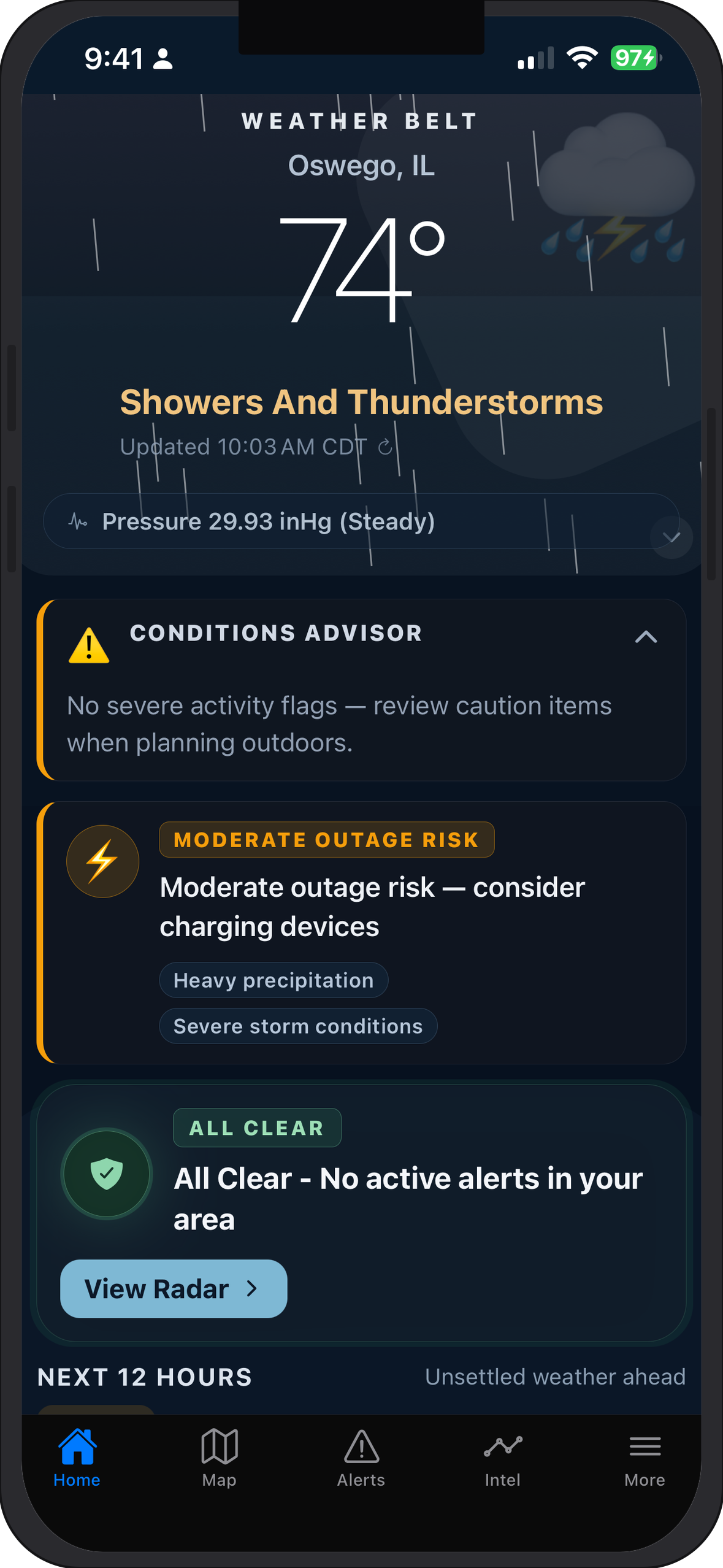
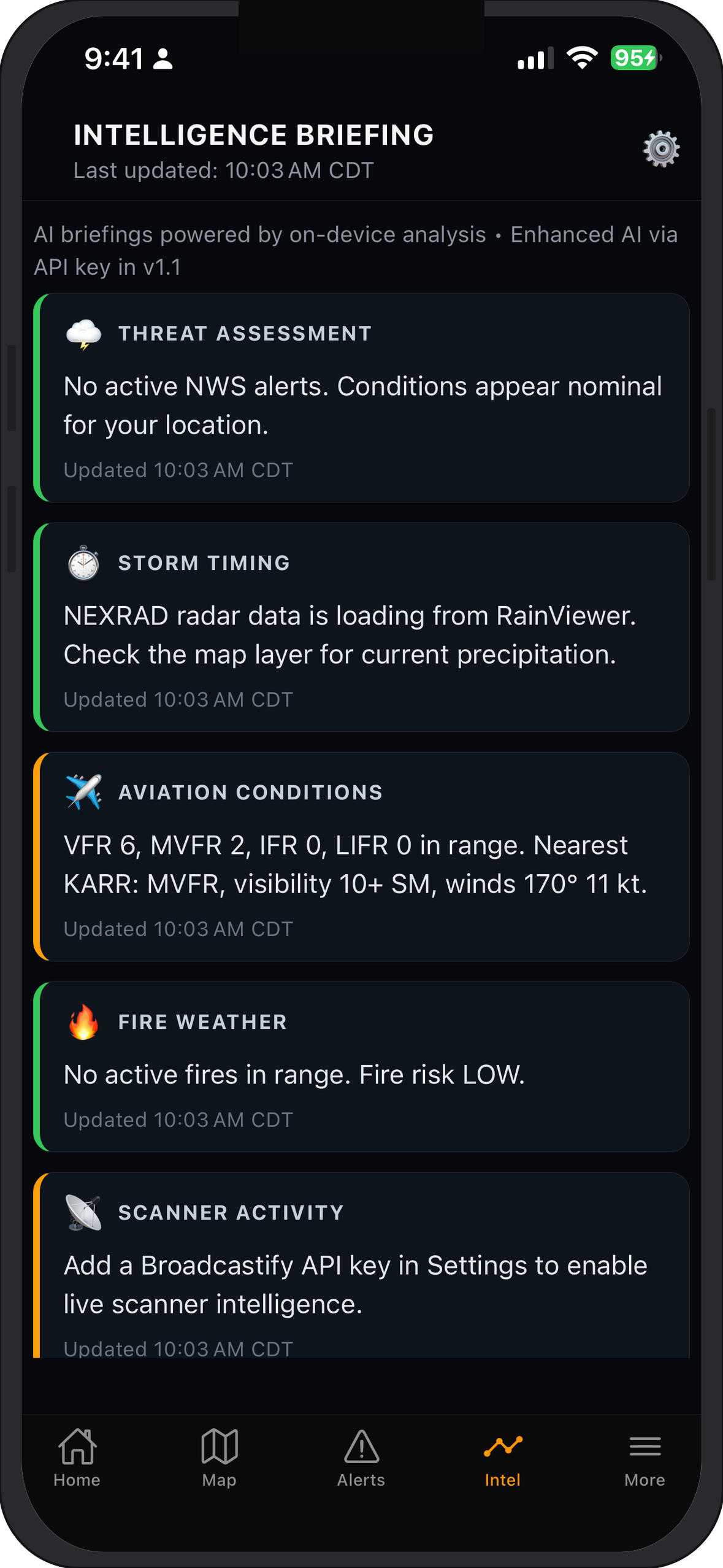
Weather Belt helps you prepare, decide, and recover with official alerts, live map context, private readiness tools, and calm event-specific guidance. One purchase. No subscription.
Android installation
Weather Belt is delivered directly through Ghost Logics and Lemon Squeezy rather than Google Play. Android may ask you to allow installation from your browser or Files app and may scan the APK with Google Play Protect. This is normal for an app installed outside Google Play.
If Android specifically identifies the file as harmful or blocks it after scanning, do not override that result. Contact dev@ghostlogics.com for help.
Scroll to see the app ->
The Weather Belt difference
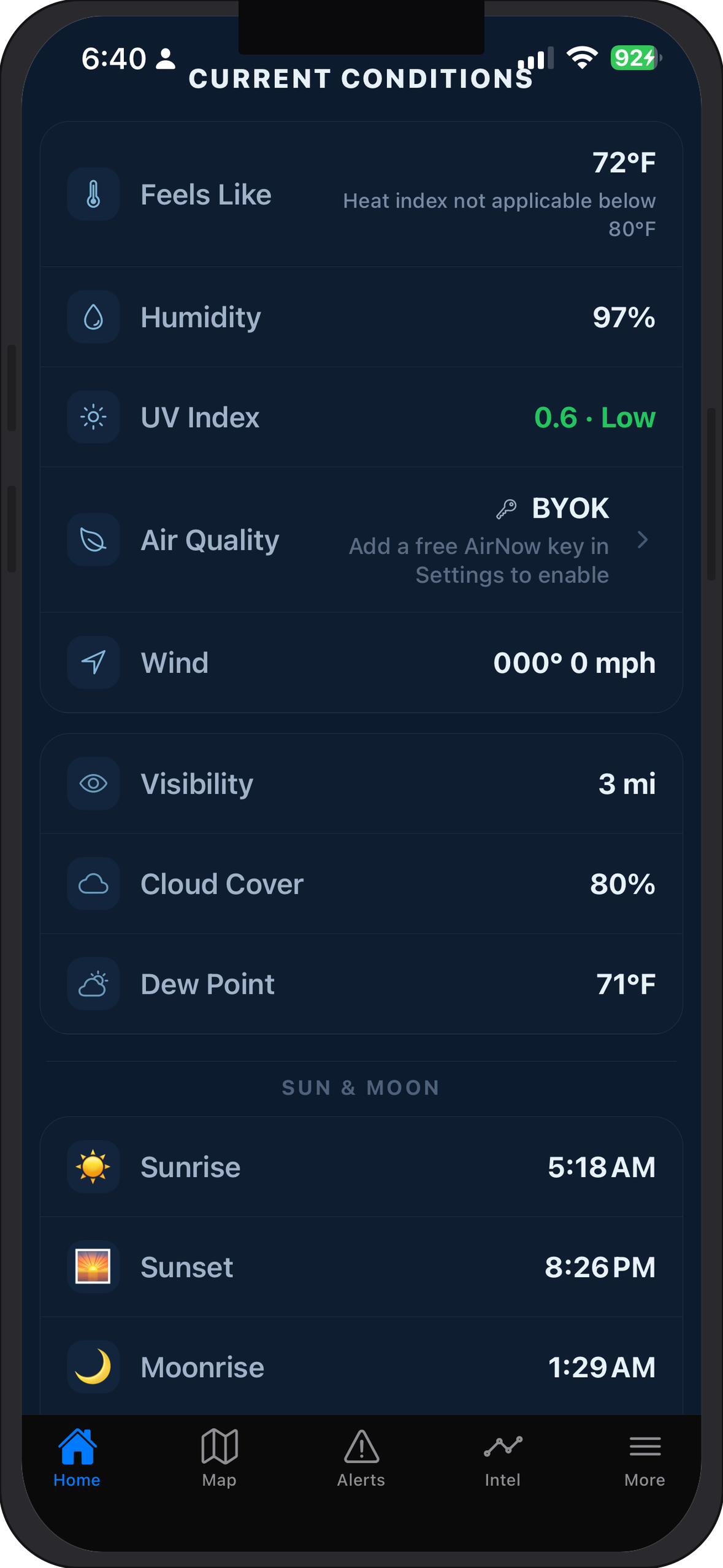
Weather Belt separates official information from preparedness guidance. It keeps the current conditions, alerts, and map close at hand, then gives you useful next steps without replacing local emergency management.
Build an on-device plan for contacts, a meeting place, weather radio, go-bag, backup power, and medications. During an official alert, Preparedness Mode puts the important pieces first.
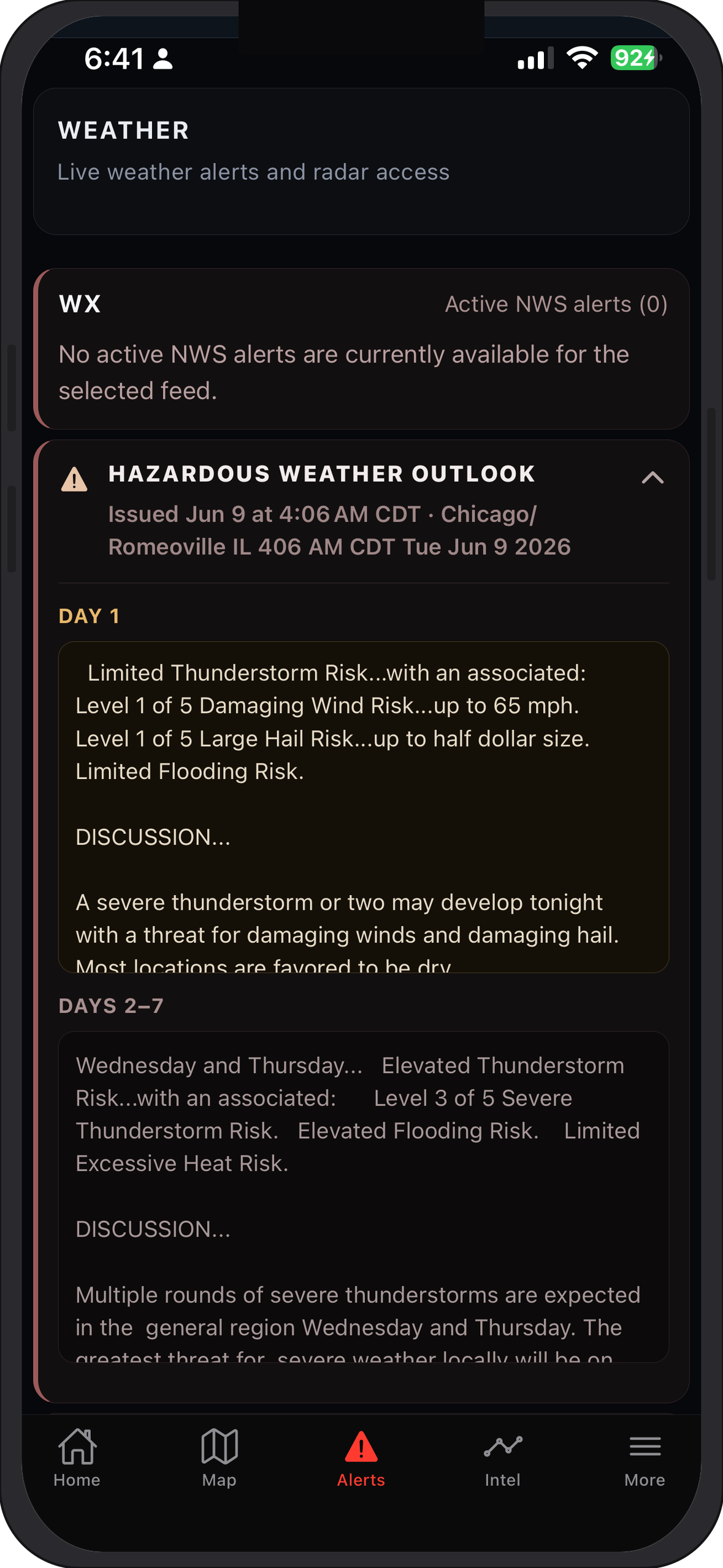
During an official NWS alert, a focused playbook pairs the official instruction with practical preparation steps for tornado, flood, heat, winter, and other events.
Share a compact update through your phone's share sheet with current official status, readiness progress, and an optional private recovery note.
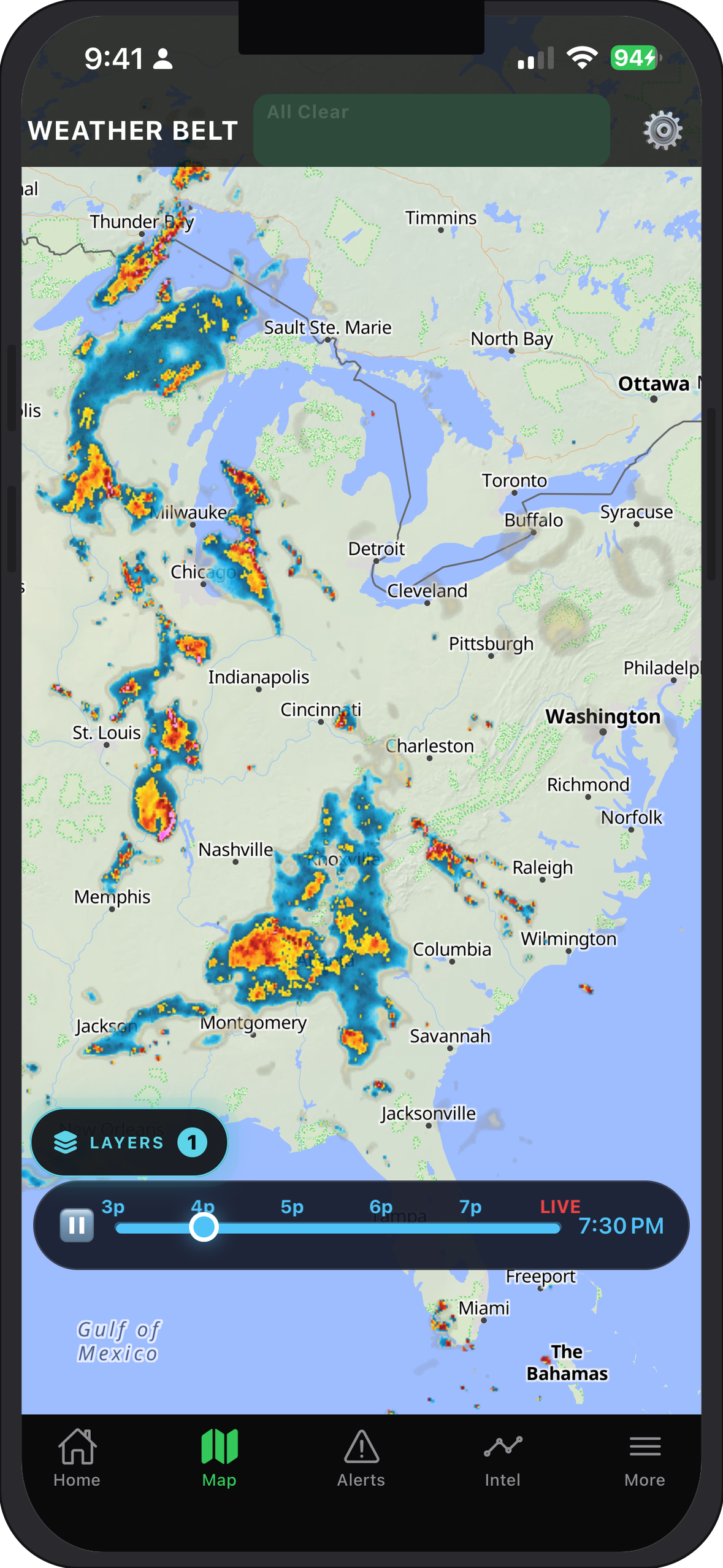
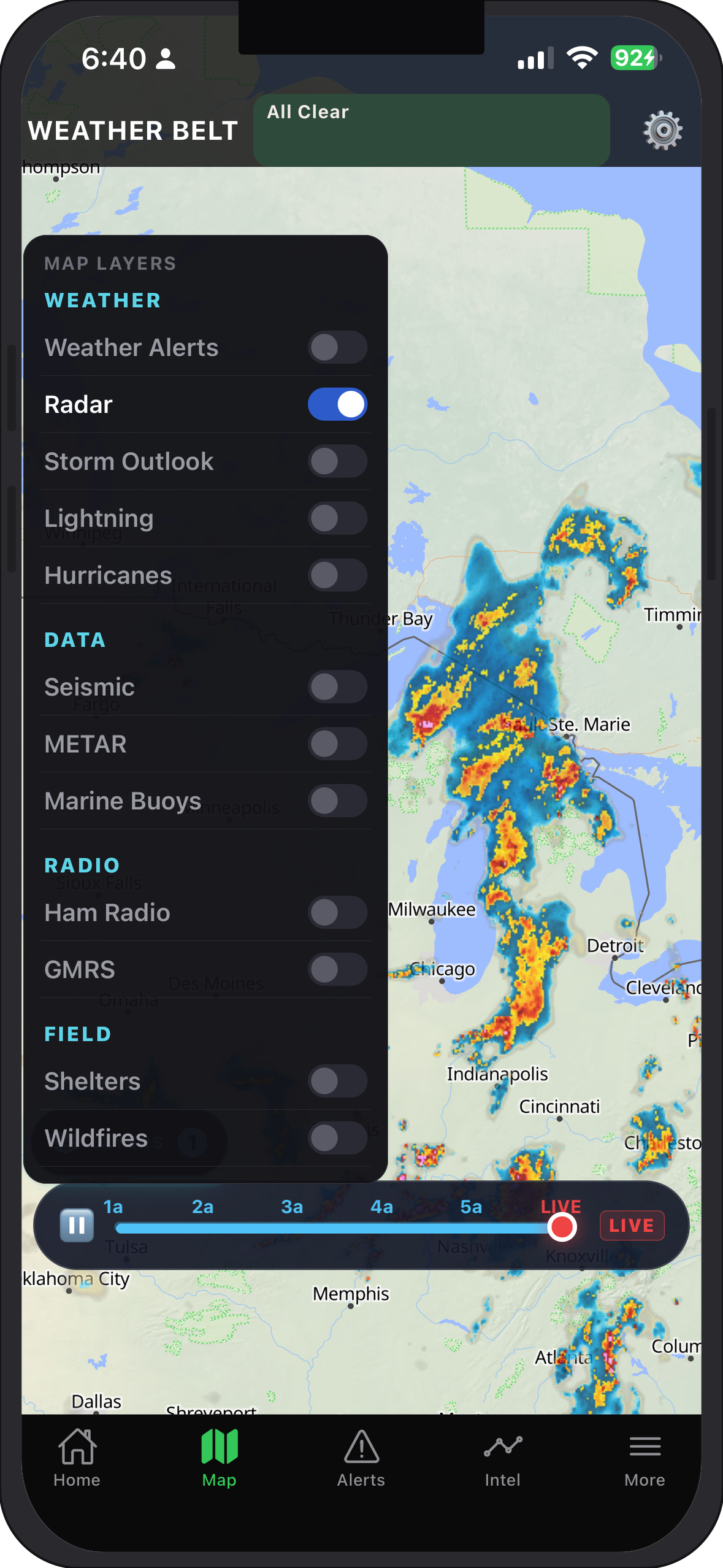
Official-source map context
The map is built around cleared public and institutional sources, with source credit available in the app.
Find your local NOAA Weather Radio station, frequency, SAME code, and transmitter status in one place.
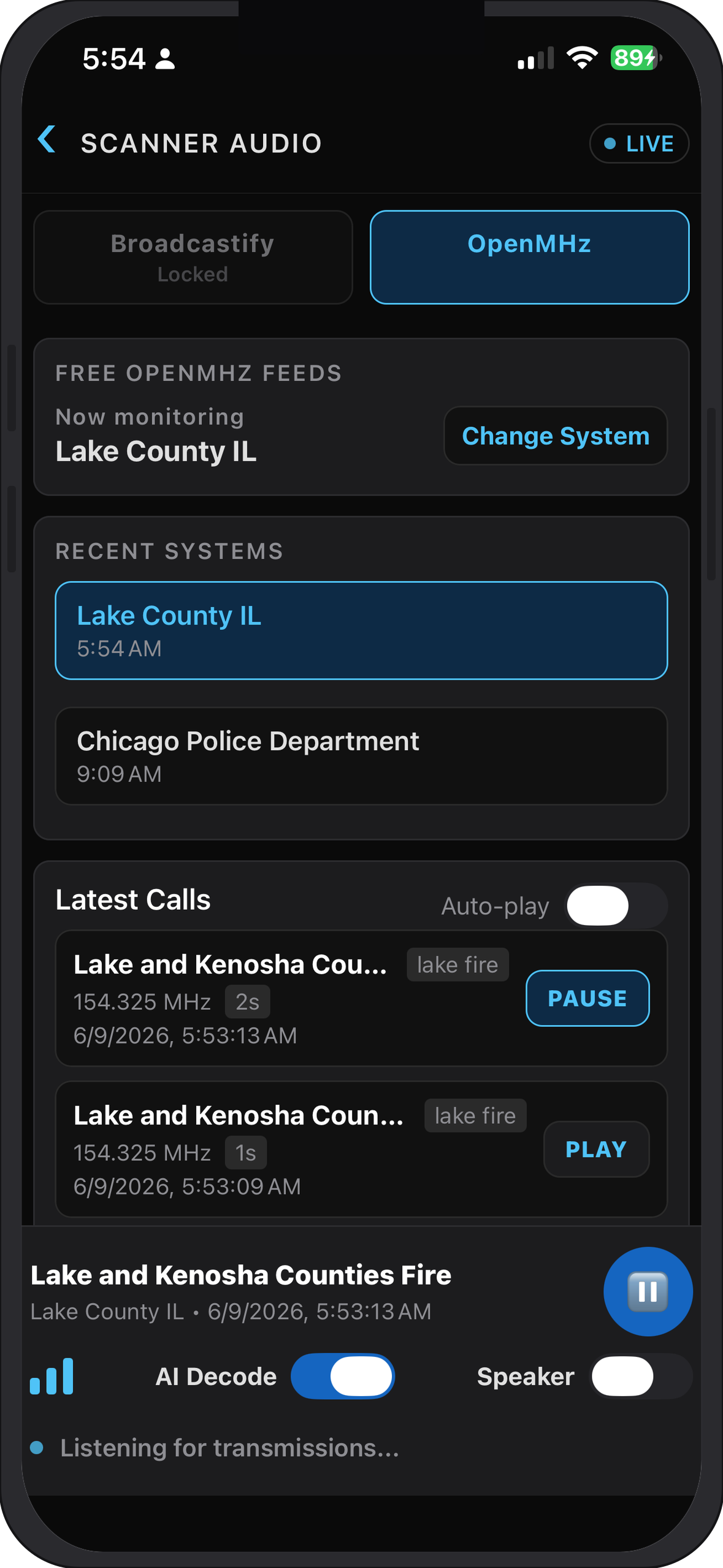
Weather Belt does not embed, proxy, catalog, or test third-party radio streams.
Tool Belt
Compass, coordinates, thermal calculations, lightning distance, river gauges, shelter-in-place guidance, go-bag and triage templates, and a private incident journal keep useful references near your alert context.
Your data, your choice
Users who already have a permitted data source can save their own authorized HTTPS endpoint locally. Weather Belt does not store provider secrets, activate feeds, proxy requests, or validate outside services.
Built for trust
Weather Belt presents official NWS alerts and instructions as official. Its readiness checklists and playbooks are preparation support, not evacuation orders, predictions, or a substitute for local authorities.
Weather Belt is a one-time purchase for iPhone and Android with no subscription.